


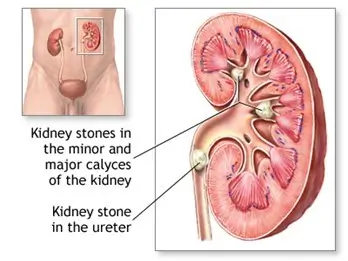
What are Kidney Stones?
A kidney stone is a hard mass of crystals that can form in any part of your urinary tract, including the kidneys, ureters, bladder, or urethra. If urine becomes too acidic or basic, the particles it contains can clump together to form crystals. This crystal will grow over time and form a detectable blockage that must be removed for normal urine flow to resume. Sometimes crystals are caused by bacterial infection. Kidney stones can be painful to pass, but they do not cause any dangerous problems. Mostly, stones can be treated by changing your diet and drinking plenty of water to dilute the particles in your urine that tend to crystallize.
The most common symptoms of kidney stones are stomach aches, blood in the urine, nausea, vomiting, fever, chills, bad smelling/, cloudy/discolored urine, pain/burning sensation while urinating, sharp pain in the lower back, or abdominal pain that varies in intensity.
Some factors that increase your risk for developing kidney stones are:
- Family/personal history of developing stones
- Being a Caucasian male
- Dehydration
- Certain diets (too high in salt, protein, calcium, and/or sugar)
- Obesity
- Inactive lifestyle or prolonged bedrest
- Digestive diseases
- Metabolic diseases
- Surgery
- Certain supplements/medications (dietary supplements, laxatives, vitamin C, antacids, migraine or depression medications)